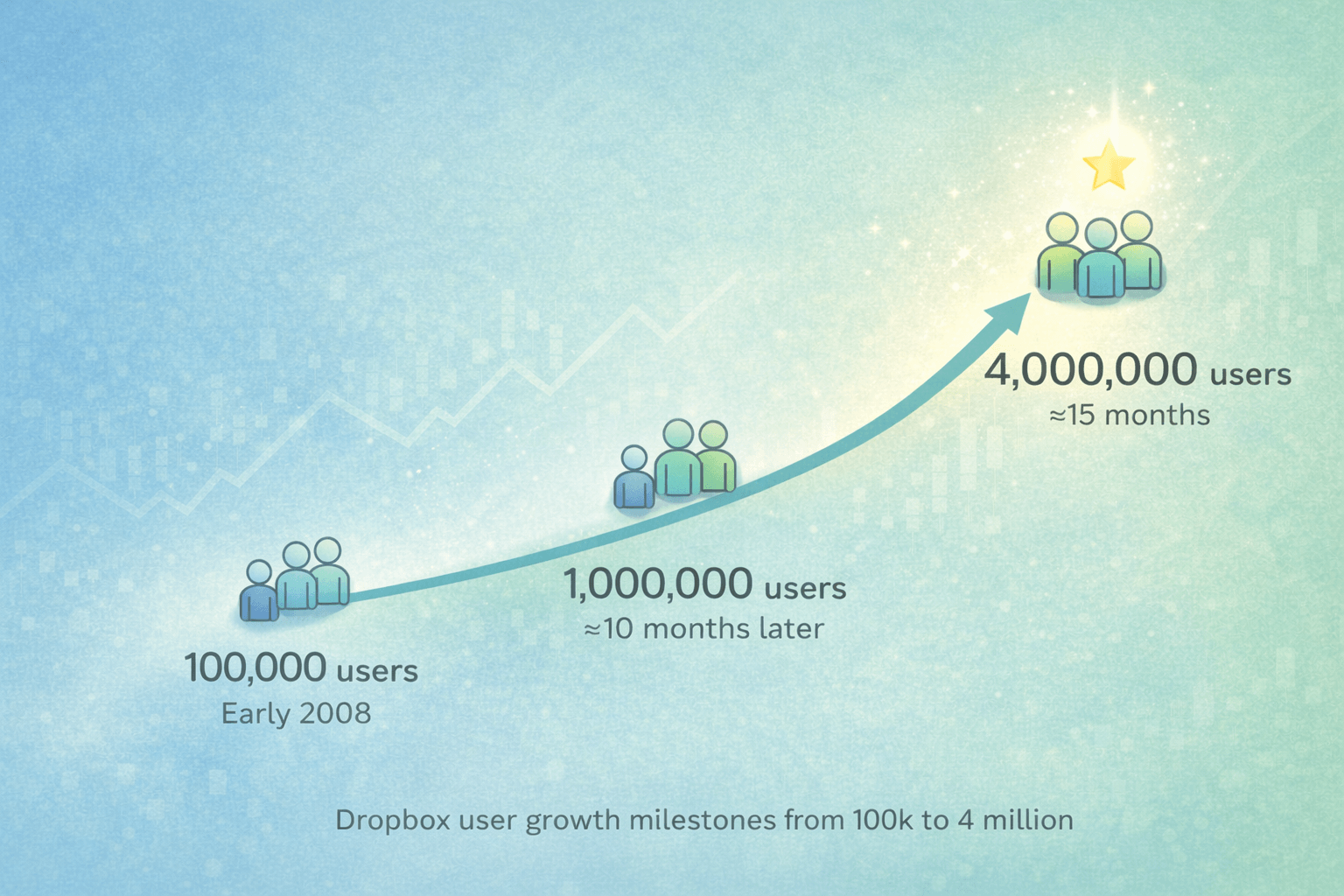
How Dropbox Grew From 100,000 to 4 Million Users Without Spending on Ads
Dropbox didn't win with flashy marketing or big ad budgets. It grew by making the product easy to understand and turning existing users into its most powerful distribution channel.
How Dropbox Grew From 100,000 to 4 Million Users Without Spending on Ads
Before Dropbox became the default way people share files, it had a serious problem.
The product was genuinely good — faster than email attachments, simpler than FTP, and more reliable than USB drives — but explaining it was hard.
Most people didn’t even know they needed cloud storage yet.
Dropbox didn’t win because of flashy marketing. It won because it figured out how to create demand before people fully understood the product.
The Problem Dropbox Faced Early On
In 2007, “cloud storage” wasn’t a common term.
If you told someone:
“Your files live on the internet and sync across devices”
The response was usually confusion — or skepticism.
Dropbox founder Drew Houston realized early that no amount of copywriting could explain the product properly. People had to see it.
That insight shaped everything that followed.
The First Breakthrough: A Simple Demo Video
Instead of launching with ads or PR, Dropbox released a short demo video on Hacker News.
The video wasn’t polished. No fancy animations. No marketing language.
It simply showed:
- A file being added to a folder
- The same file appearing instantly on another computer
That was enough.
Within 24 hours, Dropbox went from 5,000 people on the waitlist to 75,000.
No ads. No sales team. Just clarity.
That moment proved two things:
- There was real demand
- The biggest bottleneck was distribution, not product quality
The Waitlist Was Only the Beginning
Even with interest growing, Dropbox still had a constraint.
Storage costs money. Giving free space to users wasn’t cheap.
So Dropbox did something counterintuitive: They used storage as the incentive.
Instead of spending money on ads, they gave users what they actually wanted more of.
The Referral Program That Changed Everything
Dropbox introduced a simple referral system:
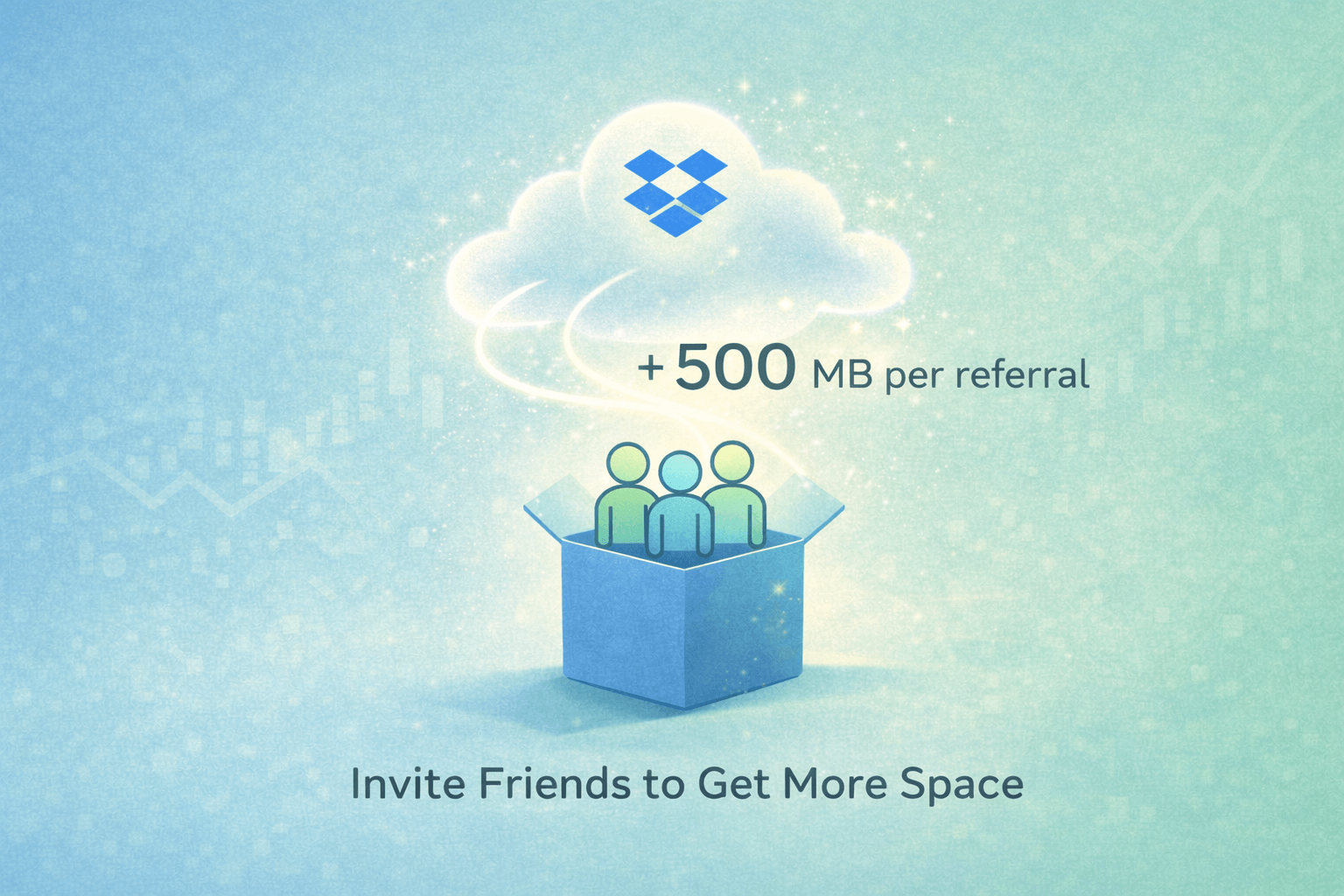
- Invite a friend → both of you get 500 MB of free storage
- Cap it at 16 GB free, so it didn’t spiral out of control
That was it.
No points. No badges. No complicated rules.
Just a clear exchange:
“Help us grow, and you get more value.”
And it worked — better than anyone expected.
The Numbers That Made Dropbox Famous
Here’s what happened after referrals launched:
- Users grew from 100,000 to 4 million in just 15 months
- 35% of daily signups came directly from referrals
- Overall signups increased by 60%
- Cost per acquisition dropped dramatically compared to paid channels
This wasn’t “viral marketing” in the buzzword sense.
It was aligned incentives.
Users wanted more storage. Dropbox wanted more users. Both sides won.
Why Dropbox’s Referral System Worked So Well
Many companies copy Dropbox’s referral idea. Very few get the same results.
Here’s why Dropbox’s version worked:
1. The reward was immediately useful
More storage wasn’t a coupon. It directly improved the product experience.
2. Both sides benefited equally
No awkward “you get something, your friend gets nothing” dynamic.
3. Sharing felt natural
People were already emailing files. Dropbox simply gave them a better way — and rewarded them for spreading it.
The Flywheel Effect
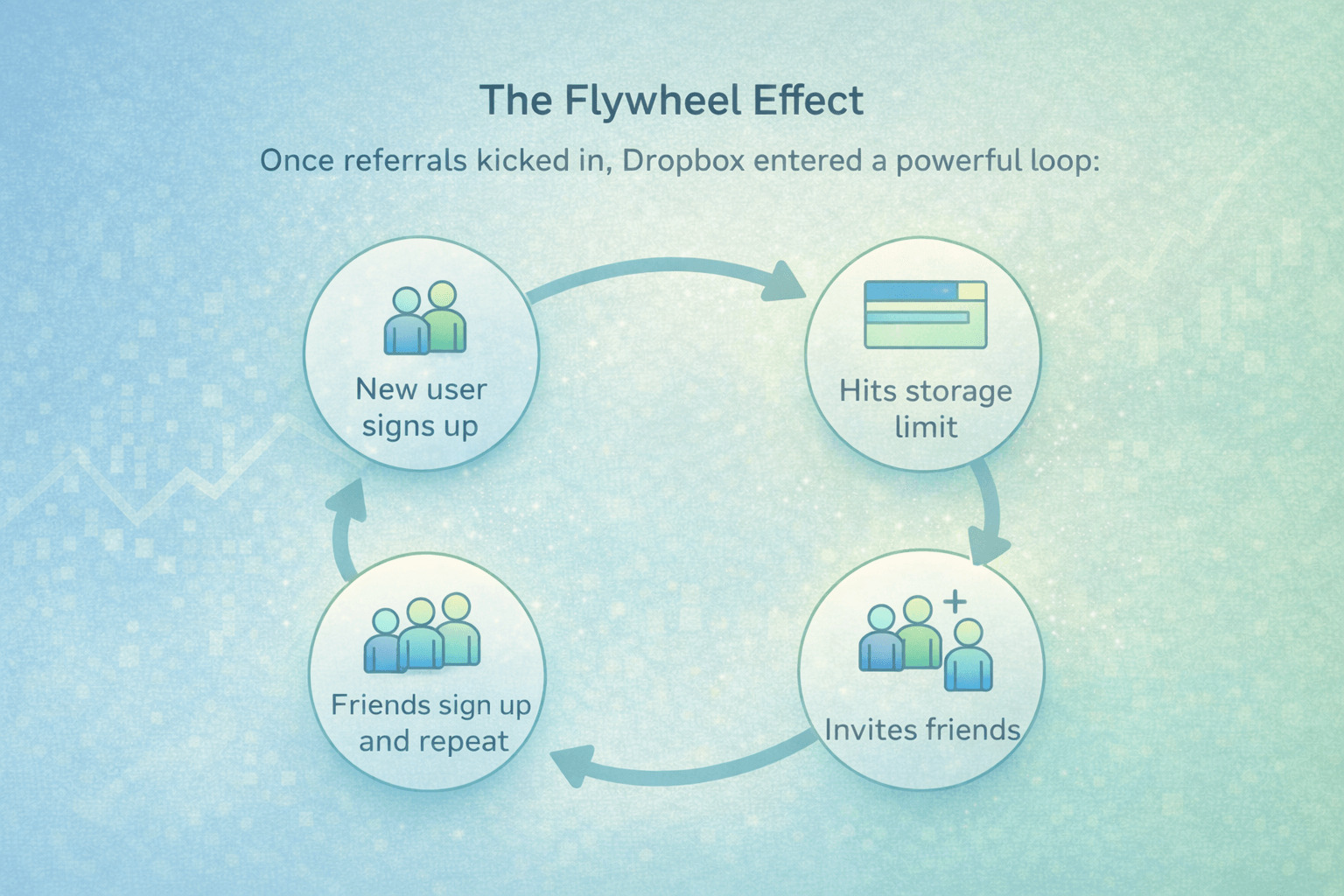
Once referrals kicked in, Dropbox entered a powerful loop:
- New user signs up
- Hits storage limit
- Invites friends to unlock more space
- Friends sign up and repeat the process
This wasn’t forced. It was inevitable.
The product itself pushed growth forward.
Paid Marketing Came Later (Not First)
A common misconception is that Dropbox scaled because it had money.
In reality:
- Dropbox relied almost entirely on organic growth early on
- Paid marketing came after product-market fit was clear
- By then, referrals had already proven demand and retention
Growth wasn’t the goal. Retention was.
What Dropbox Teaches Founders Today
Dropbox didn’t win by shouting louder. It won by making sharing unavoidable.
Here’s what still applies today:
- If your product is hard to explain, show it
- Incentives work best when they improve the product itself
- Growth systems beat campaigns
- Referrals only work when users genuinely benefit
Most referral programs fail because they feel like marketing. Dropbox’s didn’t — it felt like unlocking more product.
Other Companies That Borrowed This Playbook
Dropbox quietly influenced an entire generation of startups:
- Airbnb used referral credits to drive early adoption
- Uber rewarded both riders and drivers
- Notion offered templates and sharing hooks
- Loom grew by making videos easy to share
Different products. Same principle.
Final Thoughts
Dropbox didn’t grow because it was first. It didn’t grow because it was lucky. And it didn’t grow because of clever ads.
It grew because:
- The product solved a real pain
- The growth loop matched user intent
- The incentives were honest and valuable
That’s why this case study still matters.
If Robinhood showed how to build demand before launch, Dropbox showed how to turn users into your strongest distribution channel.