
How Robinhood Built a 1 Million-User Waitlist Before Launch (And Why It Still Matters Today)
Before Robinhood became a household name, it used a simple landing page and a smart waitlist to collect over 1 million users before launch. Here's how that strategy actually worked - and how you can apply it today.
How Robinhood Built a 1 Million-User Waitlist Before Launch (And Why It Still Matters Today)
Before Robinhood became a household name, before the debates, before the headlines - it was just a landing page.
No app. No trading. No paid ads.
Just a promise: commission-free stock trading for everyone.
And somehow, that simple page helped Robinhood collect over 1 million users before the product even launched.
That didn’t happen by accident.
The Problem Robinhood Was Solving (And Why People Cared)
Back in 2013, retail investing wasn’t exactly welcoming.
Most platforms charged $7–$10 per trade, had outdated interfaces, and felt like they were built for professionals - not everyday users. Robinhood's founders, Vladimir Tenev and Baiju Bhatt, saw this as a massive opportunity.
Their idea was simple but bold:
What if stock trading were free and easy enough for anyone to use?
That single idea was strong enough to make people wait.
The Waitlist Was the Product (At First)
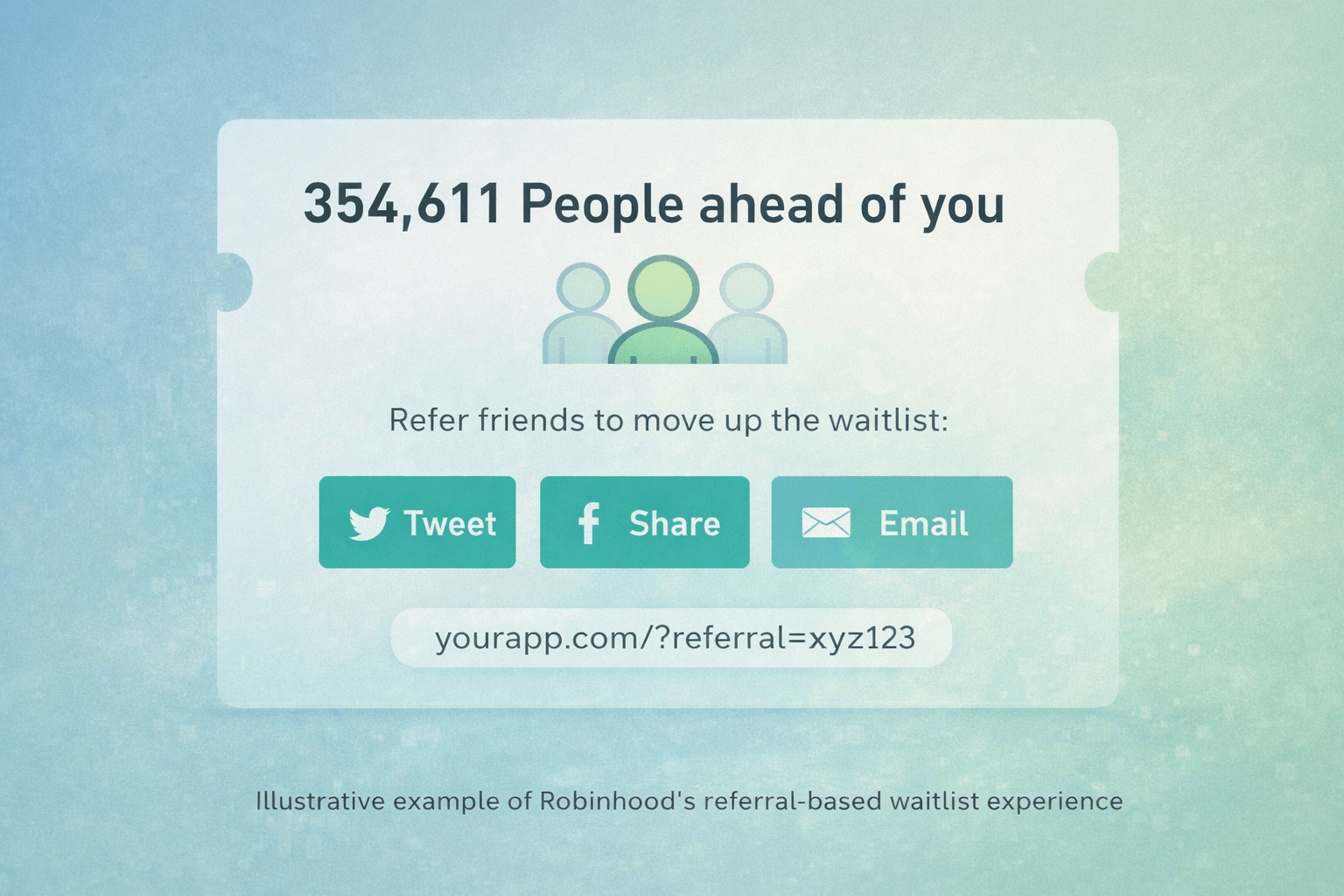
Instead of launching quietly or building in isolation, Robinhood did something smart early on.
They launched a waitlist.
The page itself was almost boring:
- One email field
- A short explanation of the product
- A message telling users they were now “in line”
But here’s the twist.
Once you signed up, you could see your exact position on the waitlist. And more importantly - you could move up the list by inviting friends.
Every referral pushed you closer to the front.
Suddenly, waiting wasn’t passive anymore.
Why People Actually Shared It
This is where most waitlists fail - they ask people to share, but give them no real reason to do so.
Robinhood nailed three things:
1. Progress felt real
You didn’t just “support the product.” You watched your number drop in real time.
That taps into the same psychology as games and fitness trackers - progress is addictive.
2. Early access felt valuable
This wasn’t a newsletter. It was access to something people believed would save them money.
For active traders, commission-free trading wasn’t nice to have - it was a game-changer.
3. Sharing benefited you, not the company
Most referral programs say, “Help us grow.”
Robinhood’s message was closer to:
“Help yourself get in faster.”
That difference matters.
The Growth Numbers (This Is Where It Gets Wild)
The results speak for themselves:
All of this happened without paid marketing.
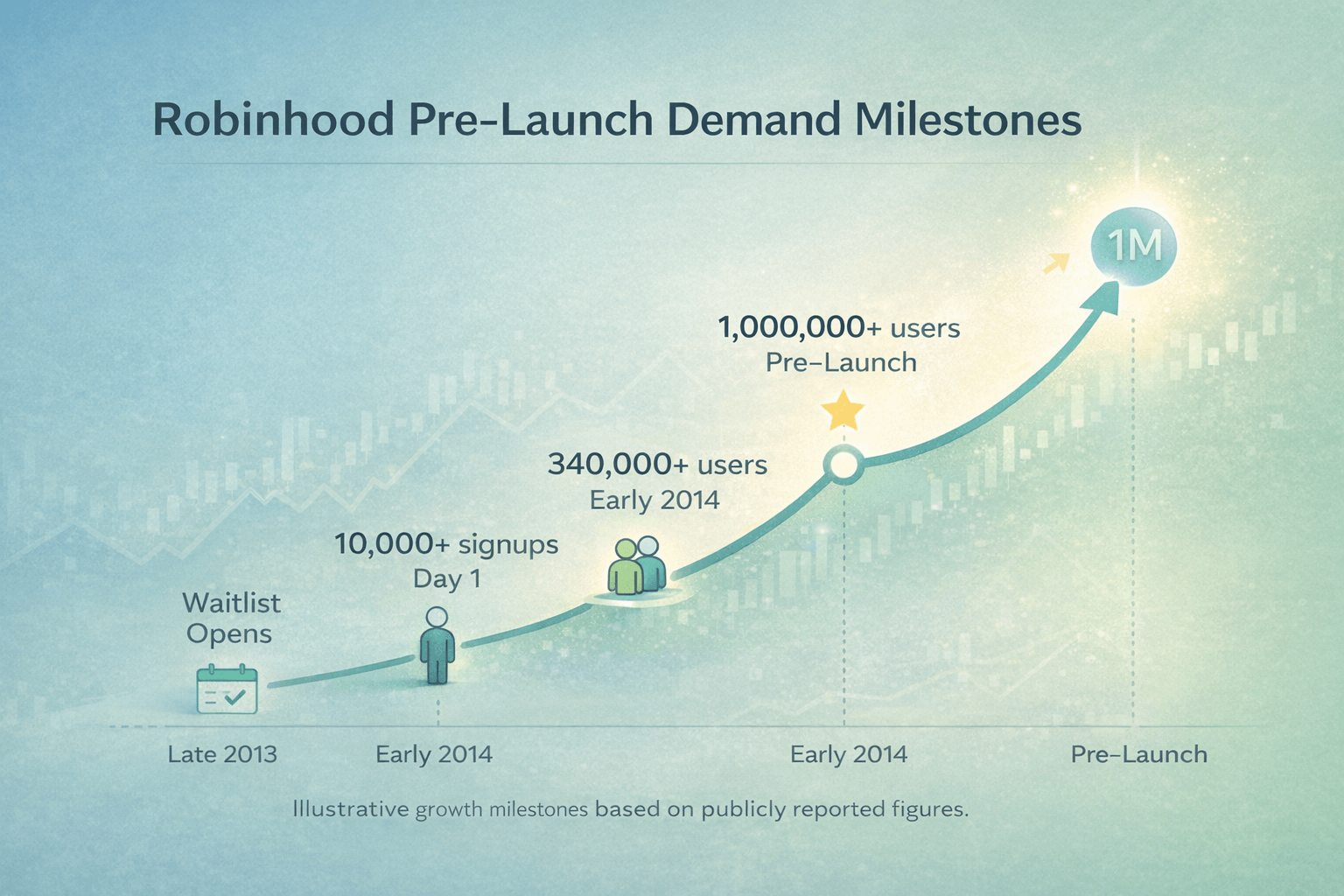
At its peak, Robinhood’s referral loop was so effective that a single user often brought in multiple additional signups - a viral coefficient well above 1.
That’s rare. And it’s hard to replicate without real incentive alignment.
An Underrated Boost: Hacker News
One detail often overlooked is timing.
Early on, Robinhood’s landing page surfaced on Hacker News and climbed to the top. That single spike brought in thousands of highly relevant users - engineers, early adopters, and investors - many of whom shared the waitlist further.
That kind of audience doesn’t just sign up. They amplify.
What Happened After Launch
The waitlist wasn’t just a vanity metric.
When Robinhood finally opened access:
- A large portion of waitlisted users converted immediately
- Engagement was high from day one
- Investor interest surged, backed by visible demand
Within a couple of years, Robinhood crossed 6 million users, largely driven by word-of-mouth and referrals seeded during the waitlist phase.
The waitlist didn’t just validate demand - it created momentum.
Why This Strategy Still Works Today
The internet has changed, but human behavior hasn’t.
People still respond to:
- Clear value
- Visible progress
- Fair rewards
- A sense of being early
The mistake many founders make is copying the surface of Robinhood’s strategy - adding a waitlist - without copying the mechanics that made it work.
A waitlist without motivation is just an email form.
How Startups Can Apply This Today
If you’re planning a launch, here’s what Robinhood’s story actually teaches:
- Remove friction: Ask only for what you need.
- Show progress: Let users see where they stand.
- Reward sharing meaningfully: Make referrals personally valuable.
- Communicate clearly: One strong message beats five vague ones.
- Create anticipation: Scarcity isn’t manipulation - it’s focus.
Plenty of modern companies have used similar tactics successfully:
- Monzo used referrals to drive early banking adoption
- Superhuman built exclusivity through a long waitlist
- Clubhouse scaled early through invite-only access
The pattern repeats for a reason.
Final Thoughts
Robinhood’s waitlist wasn’t clever growth hacking.
It was thoughtful product thinking applied before the product existed.
They didn’t just collect emails. They built belief. They structured demand. They turned early users into advocates.
And that’s why the strategy still gets talked about today.
If you’re launching something new, the lesson is simple:
Don’t rush to launch. Build momentum first.